

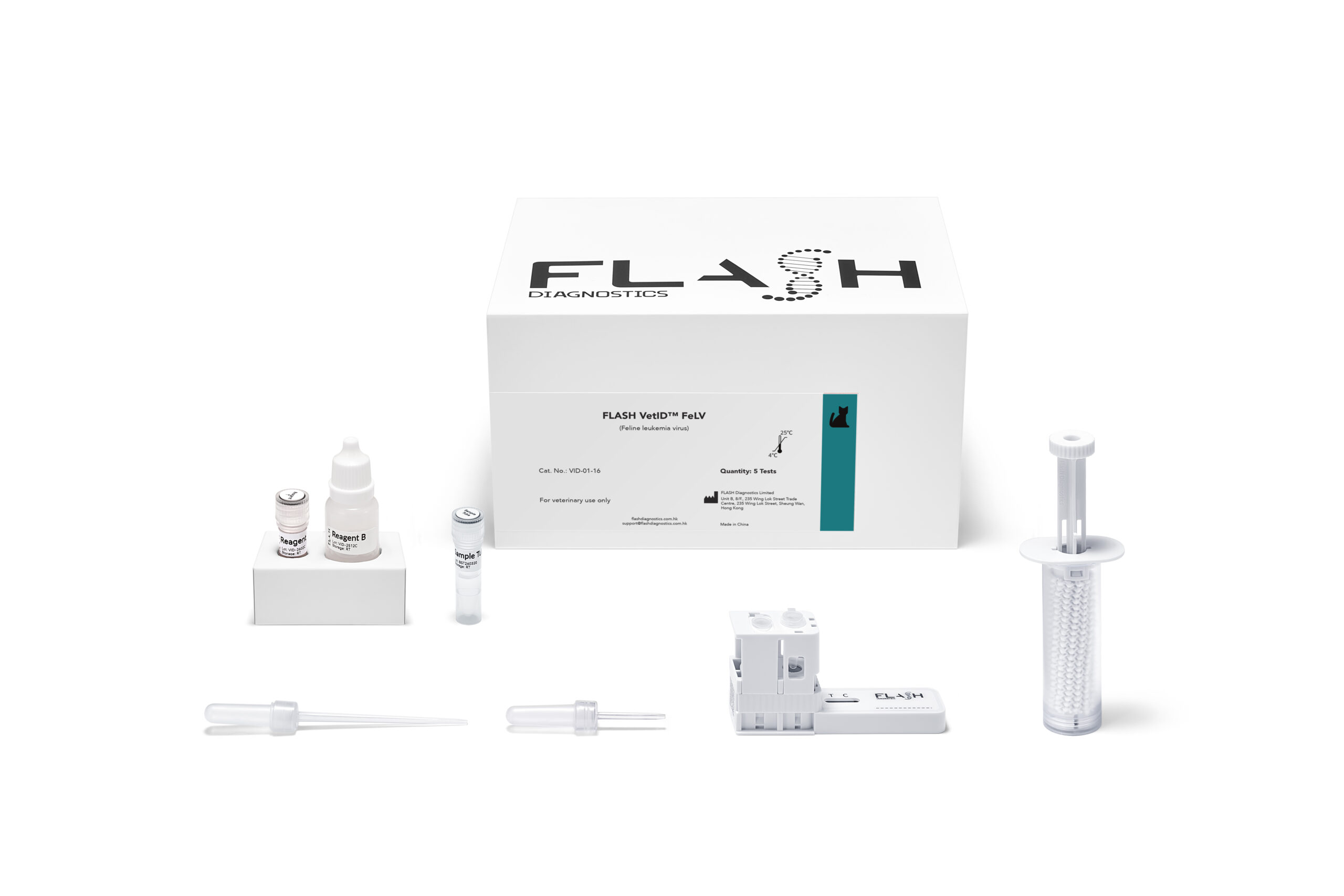
FLASH VetIDTM FeLV
Fast test for the qualitative detection of cell-associated proviral DNA of Feline leukemia virus (FeLV) in whole blood of the cat.
- Detects integrated, cell-associated FeLV proviral DNA in both progressive and regressive infections
- Essential for antigen-discordant cases
40
minutes
Total assay time
50 μL
EDTA whole blood
Sample
Room
temperature
Storage
12
months
Shelf life
Clinical suspicion:
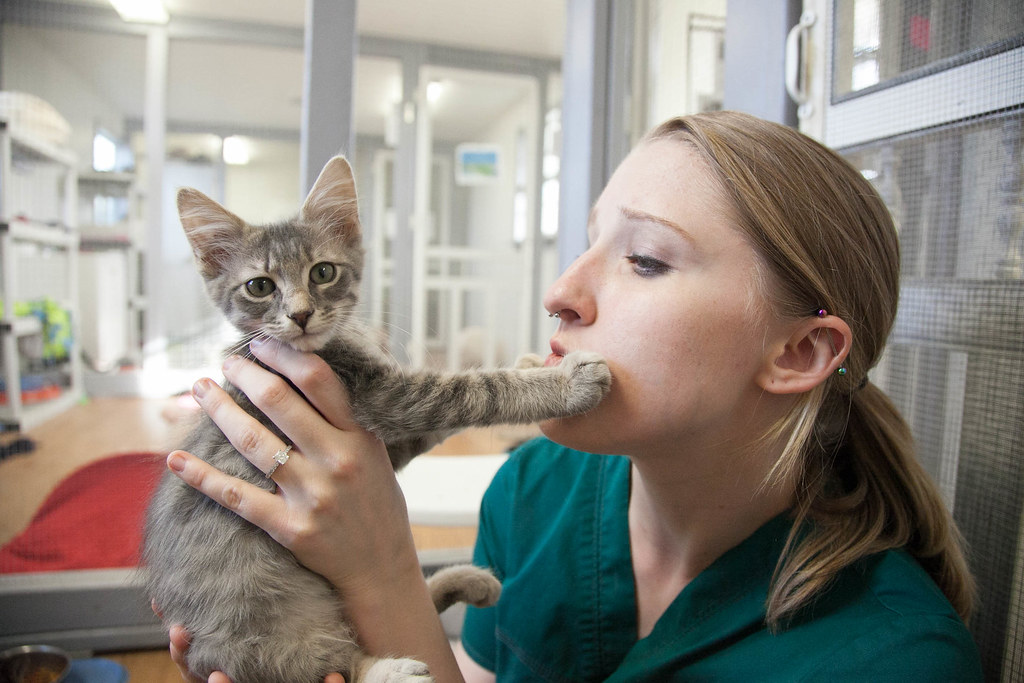
- Kittens or young cats from shelters or multi-cat households; cats with outdoor access or contact with an FeLV-infected cat
- Unexplained non-regenerative anaemia, neutropenia, or other evidence of bone-marrow suppression
- Persistent fever, weight loss, stomatitis, diarrhoea, or unusually severe secondary infections
- Lymphoma, leukaemia, or a mediastinal mass, or other suspected FeLV-associated neoplasia
- Reproductive failure, fading kittens, or illness in a cat whose retrovirus status is unknown
Screening / prevention programs:
- First presentation when FeLV status is unknown and an immediate decision is needed
- Following known or suspected exposure, or before introducing a cat into an FeLV-negative household
- To identify antigen-negative regressive infection, which a negative antigen result alone cannot exclude
- Before vaccination, breeding, or immunosuppressive treatment, when unrecognised infection would change management
- Blood-donor screening, since antigen-negative regressive cats remain unsuitable donors
- Pair with p27 antigen testing for a more complete assessment
Pathogen and transmission
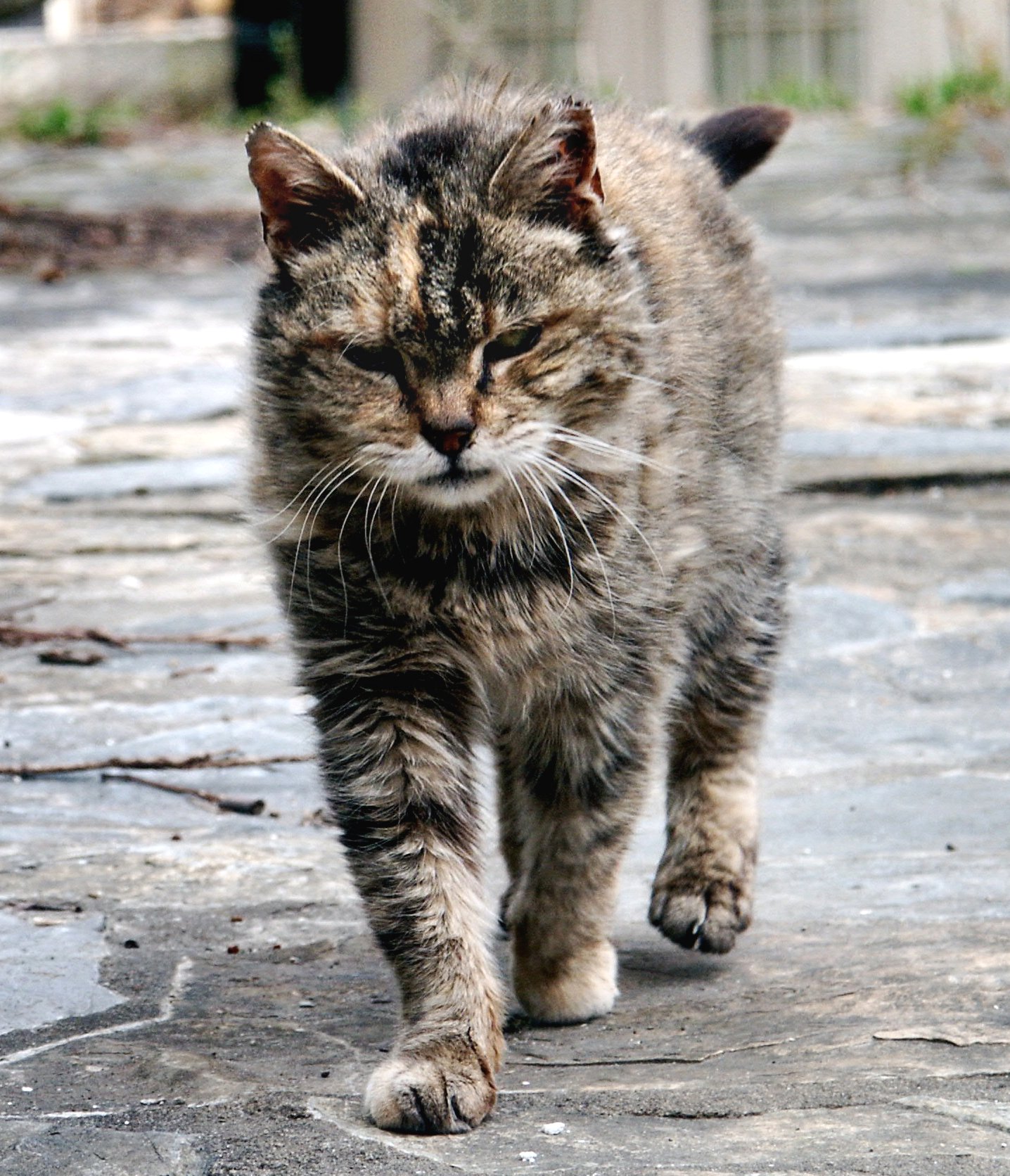
Feline leukemia virus (FeLV) is an enveloped, single-stranded RNA gammaretrovirus. After entering a susceptible cell, viral RNA is reverse-transcribed and integrated into the cat’s genome as proviral DNA. FeLV spreads mainly through saliva during prolonged close contact, including mutual grooming and shared food or water dishes; biting, vertical transmission, and contaminated blood products can also transmit infection. Kittens are most susceptible to progressive infection.
Species-Specific Manifestations
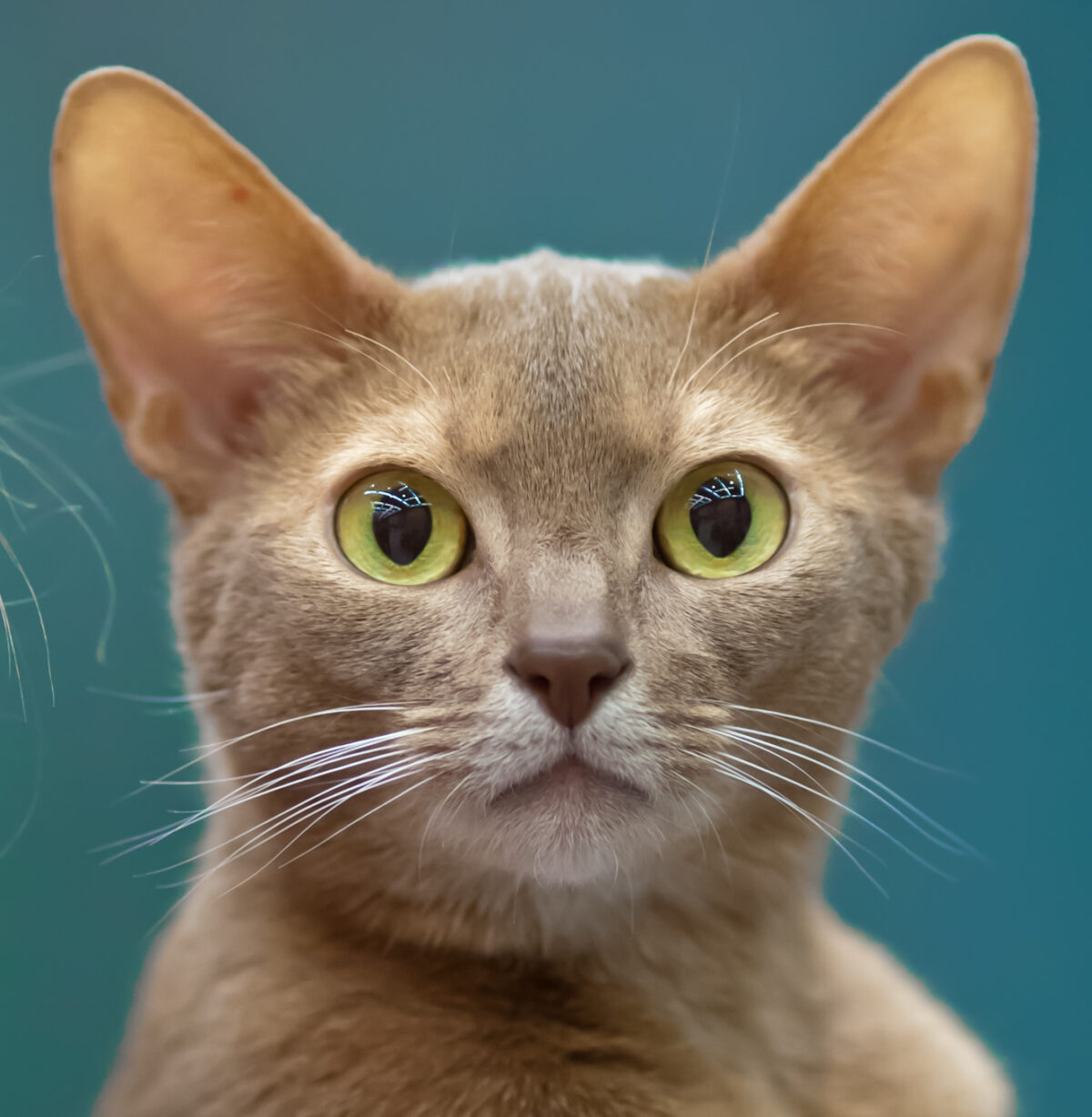
Outcome after exposure depends on the immune response. Cats that fail to control the virus develop progressive infection, with persistent antigenaemia, high proviral load and the highest risk of bone-marrow suppression, lymphoma, and death. Cats that mount a partial response develop regressive infection: aviremic and not actively shedding, but retaining low-level proviral DNA that can reactivate under stress. A minority develop abortive infection, clearing the virus before it reaches the bone marrow and left with antibodies only. Distinguishing these courses is central to prognosis and management.
The Diagnostic Value Proposition
|
Proviral DNA FLASH VetIDTM |
p27 Antigen |
Likely course |
|---|---|---|
|
+ |
+ |
Progressive infection – current antigenaemia; persistent p27 over time confirms the progressive course |
|
+ |
– |
Regressive infection (once very early infection is excluded) – not shedding, but provirus positive for life and unsuitable as a blood donor |
|
– |
+ |
Infection unlikely – consistent with a low-risk cat without recent exposure |
|
– |
– |
Unresolved – does not fit a typical infection pattern; repeat both tests |
Overall workflow
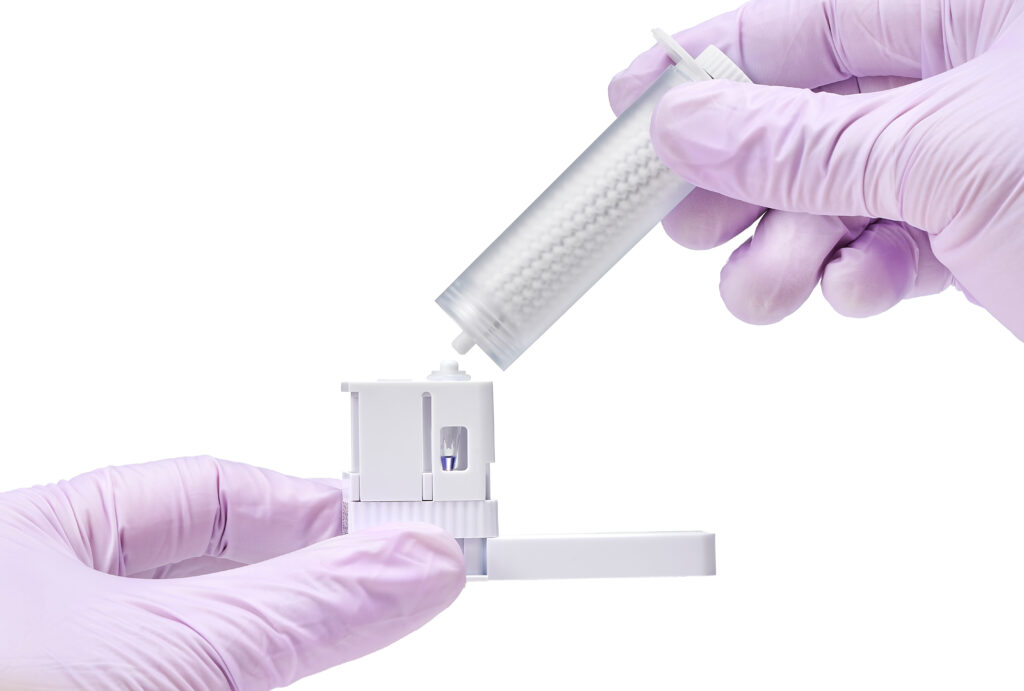
1. Prepare the sample in 10 minutes with the SampleDirect cartridge
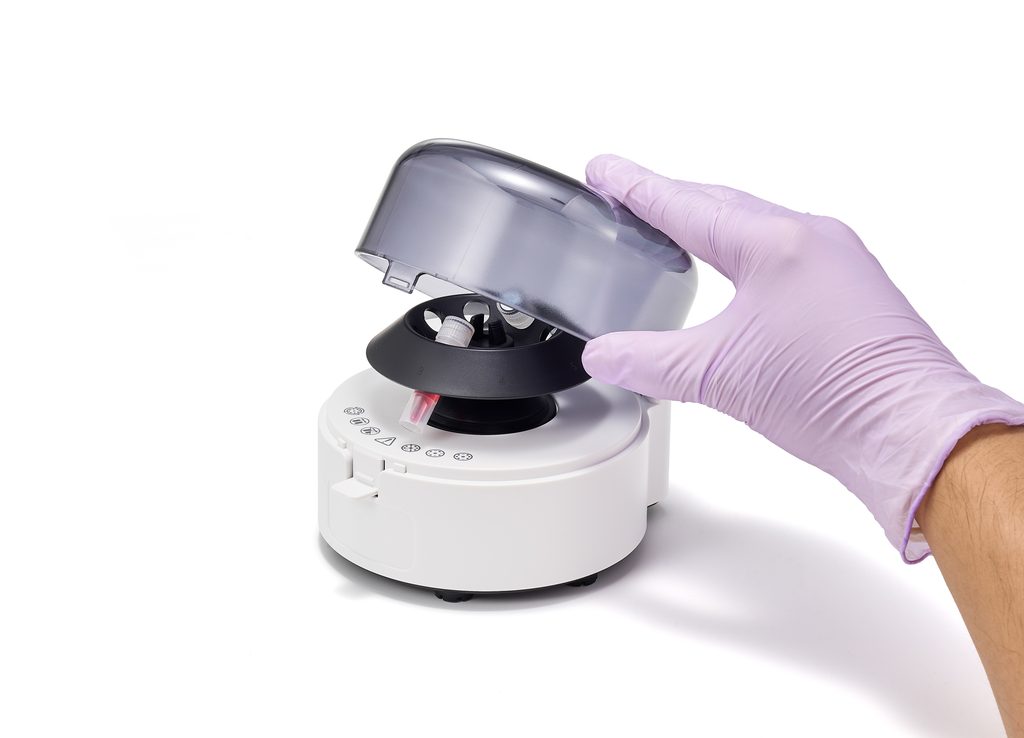
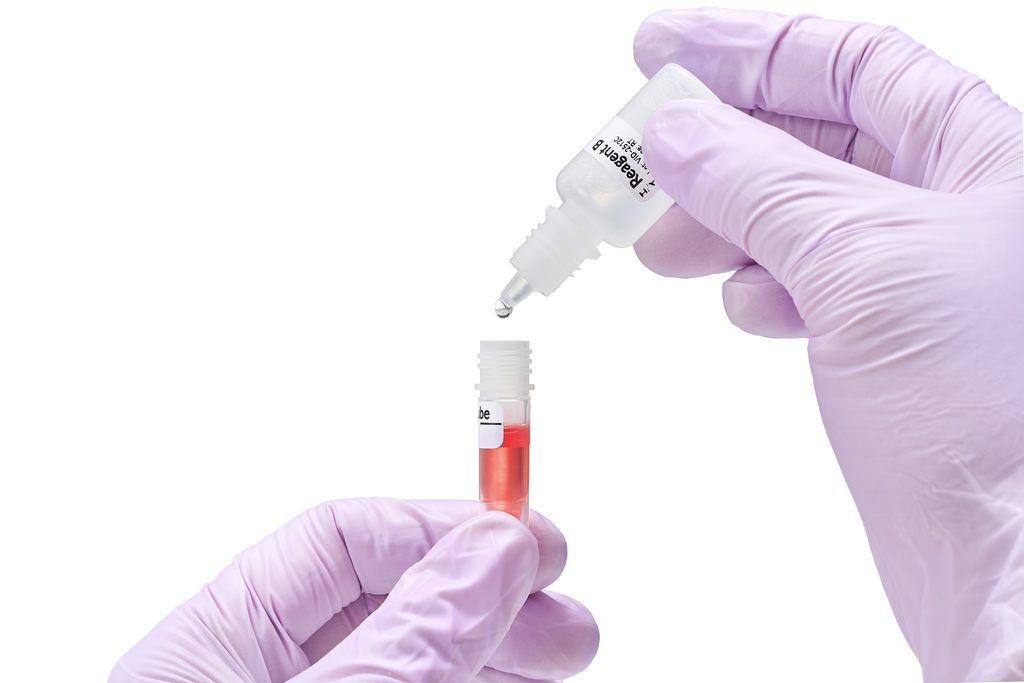
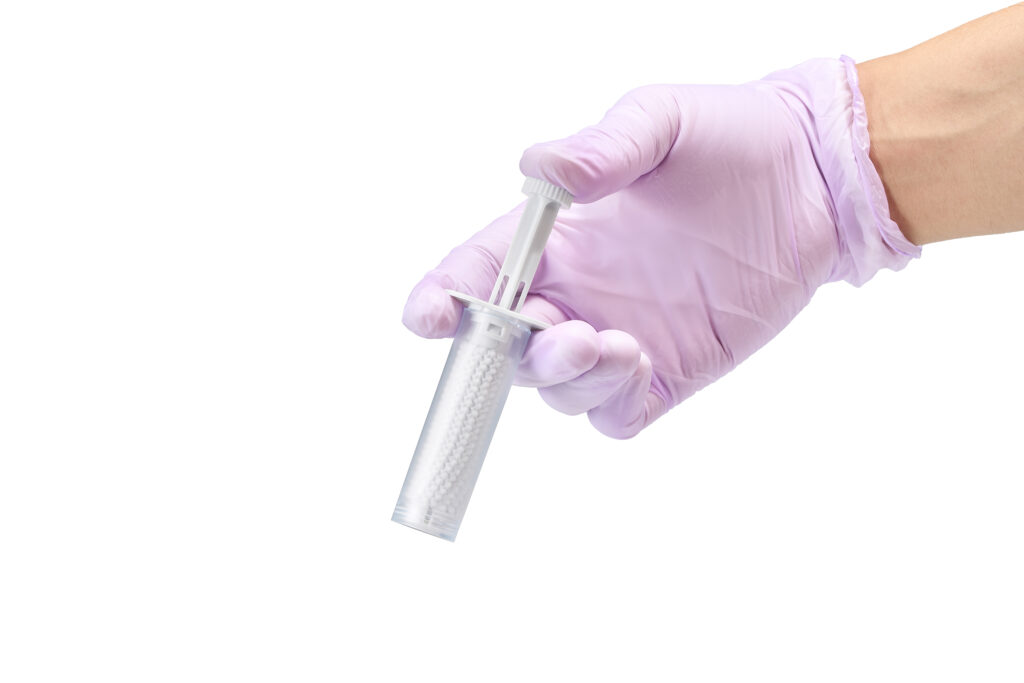
2. Transfer sample into the test cartridge and run it on the FLASH BaseTM
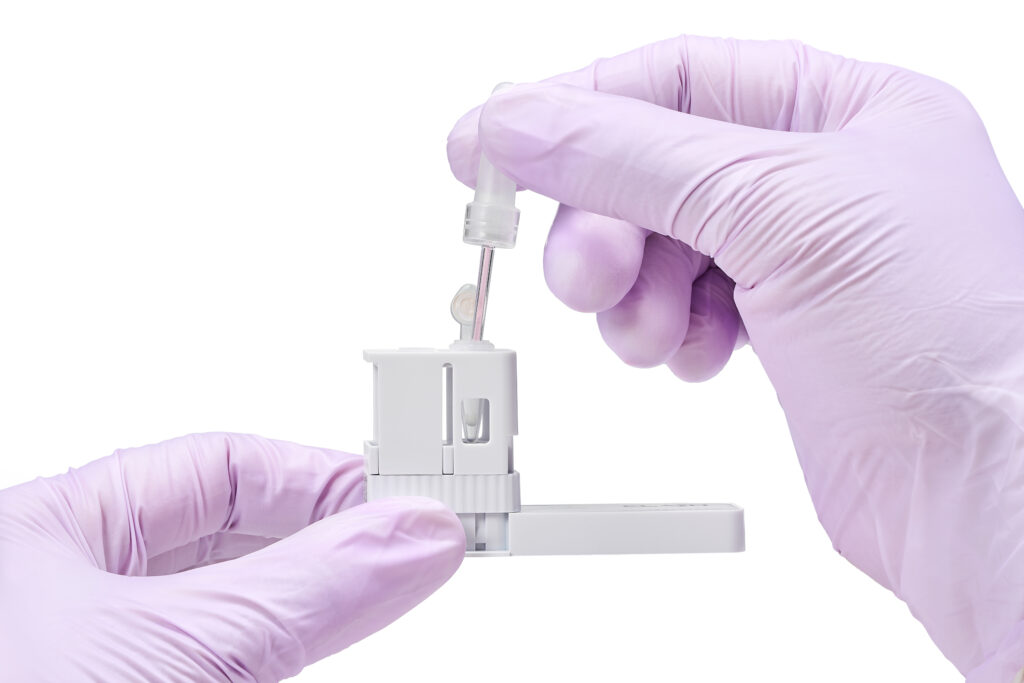
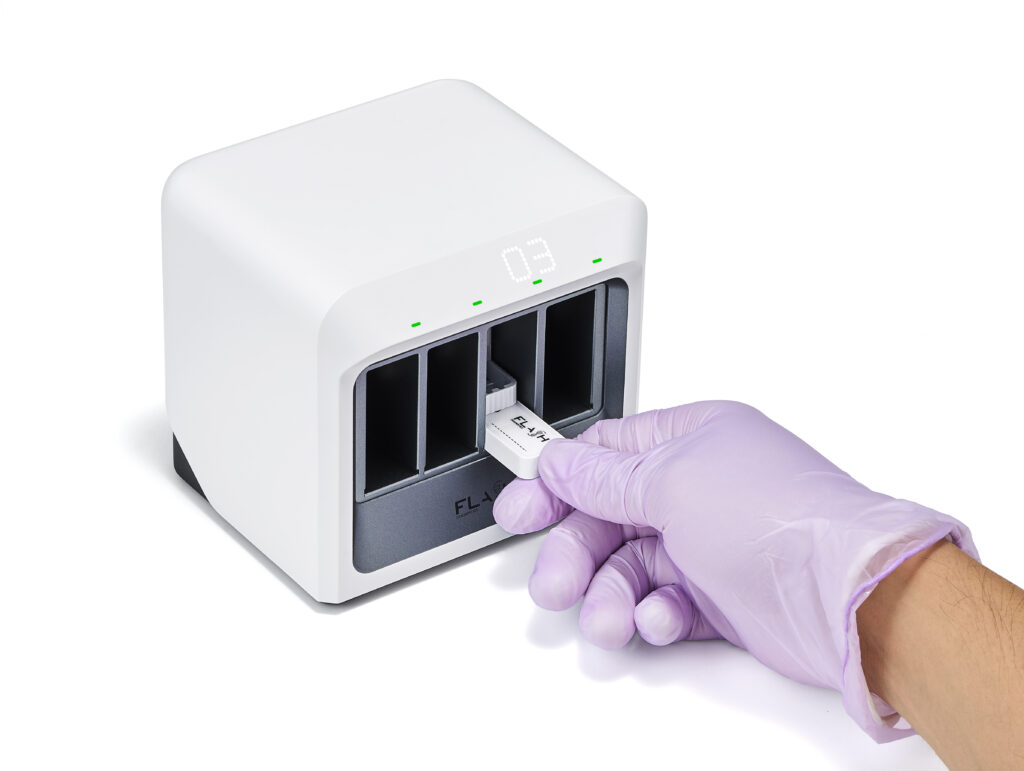
3. Activate the test cartridge and read the results
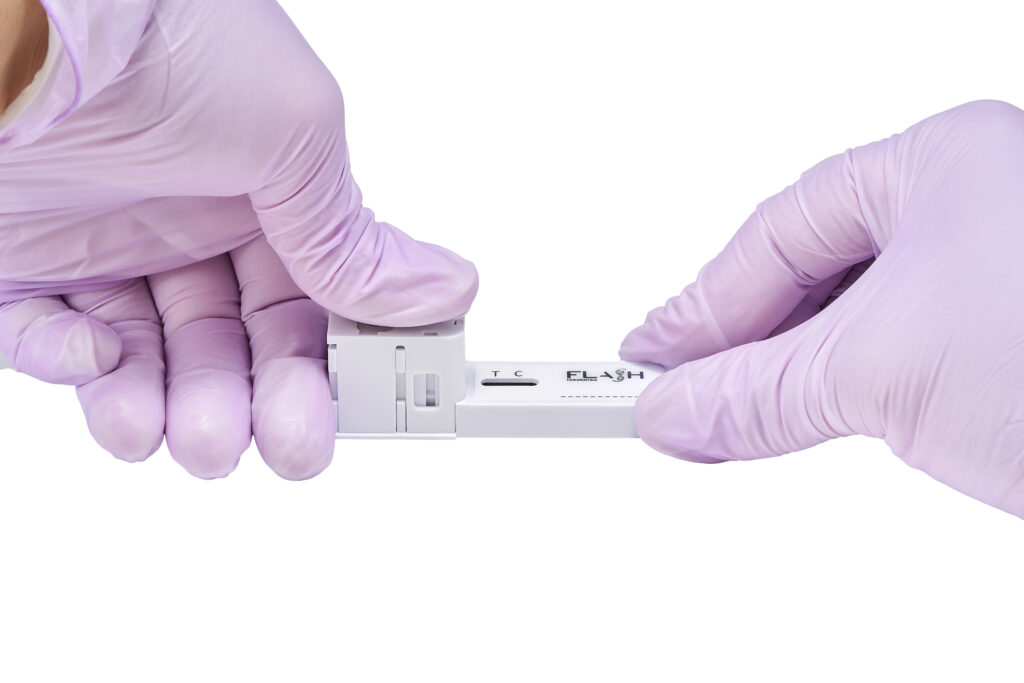
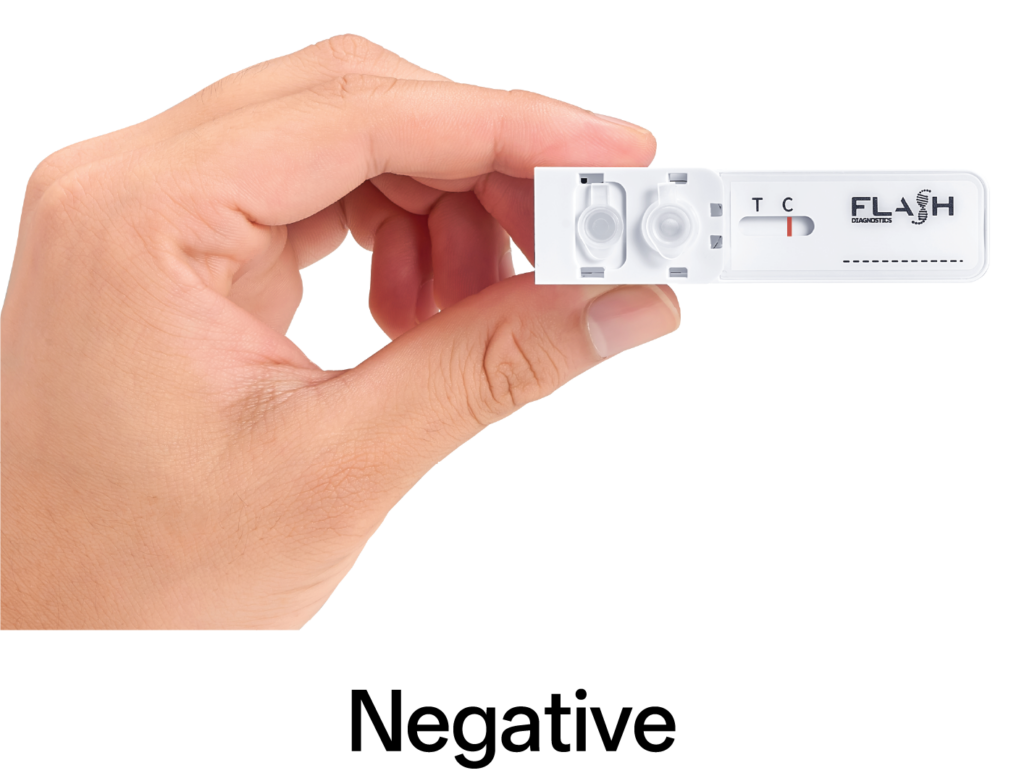
OR
General information
Target: Feline leukemia virus
Species: Feline
Sample type: 50 μL EDTA blood
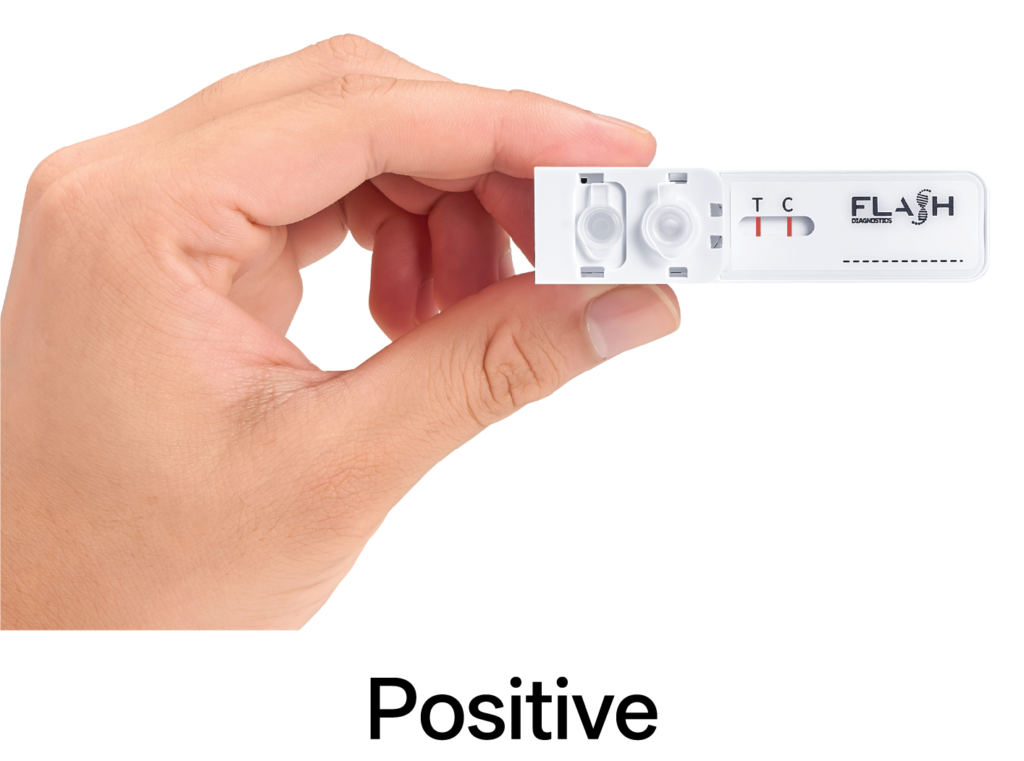
Result interpretation: Visual – lateral flow strip
Format: Single-use disposable test kit
Reagents: Lyophilized beads for isothermal amplification reaction
Hands-on sample preparation: 5 minutes + 5 minutes centrifugation
Reaction time: 30 minutes
Analytical limit of detection: 1,500 copies per reaction
Shelf life and storage: 12 months at room temperature