

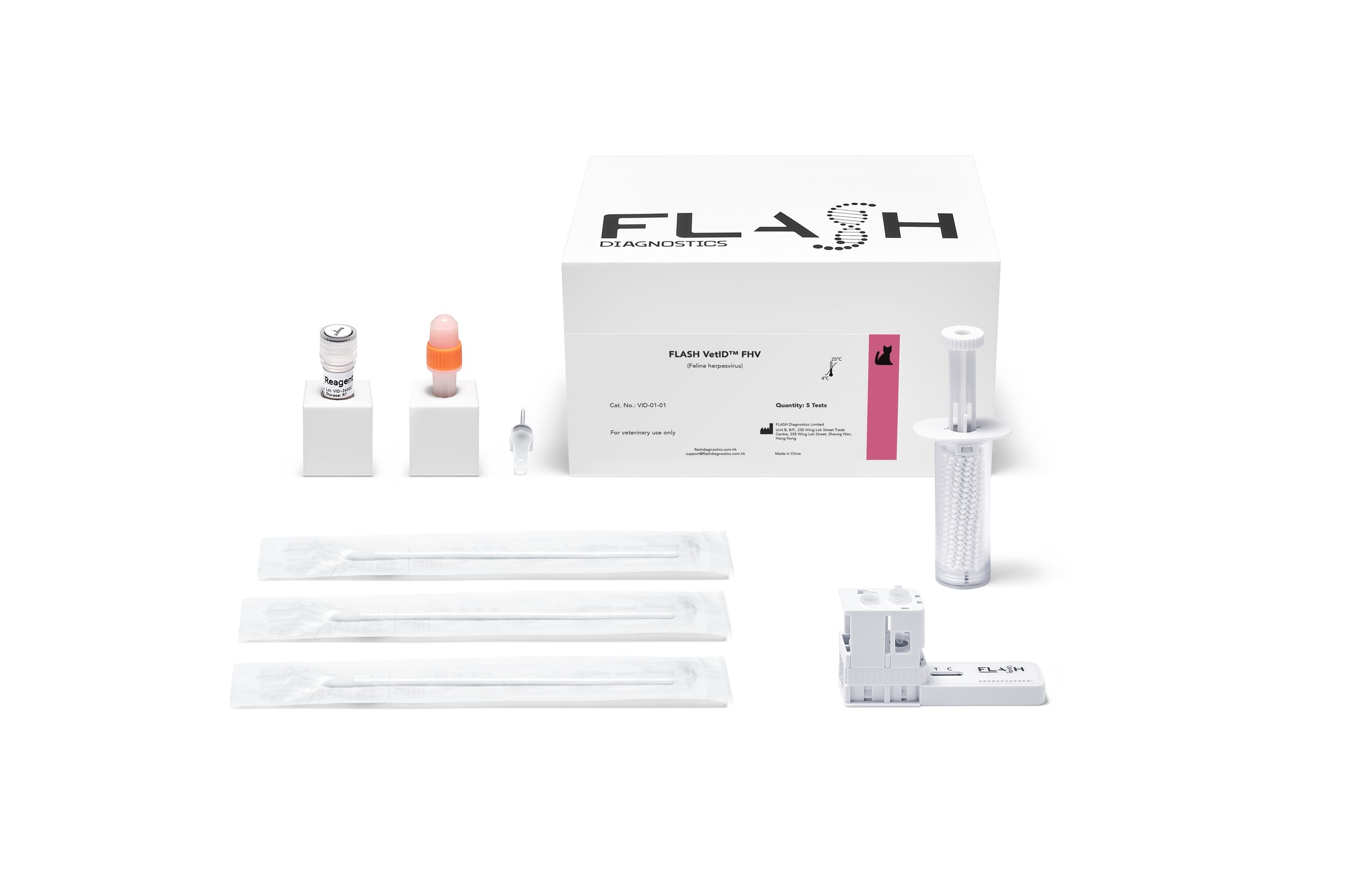
FLASH VetIDTM FHV
Fast test for the qualitative detection of DNA of Feline herpesvirus type 1 (FHV-1) in conjunctival, nasal, and oropharyngeal swabs of the cat.
- Sensitivity 100.00% & Specificity 98.59% (n=324)
- Supports diagnosis during active or recrudescent shedding
- Sample: conjunctival and oropharyngeal swabs (essential), add a nasal swab if secretions are present
35
minutes
Total assay time
Detect
viral DNA
Test
Room
temperature
Storage
12
months
Shelf life
Clinical suspicion:
- Paroxysmal sneezing with serous-to-mucopurulent oculonasal discharge
- Conjunctivitis, blepharospasm, and chemosis
- Dendritic or geographic corneal ulceration (pathognomonic for FHV keratitis)
- Fever and anorexia, especially in kittens
- Recrudescent signs after stress, corticosteroid therapy, or hospitalisation
Screening / prevention programs:
- New introductions into shelters, catteries, and multi-cat households
- Kittens presenting with recurrent conjunctivitis or keratitis
- Pre-breeding screening of queens with a history of ocular disease
- Outbreak work-up alongside other agents of the feline URTD complex
Pathogen and transmission
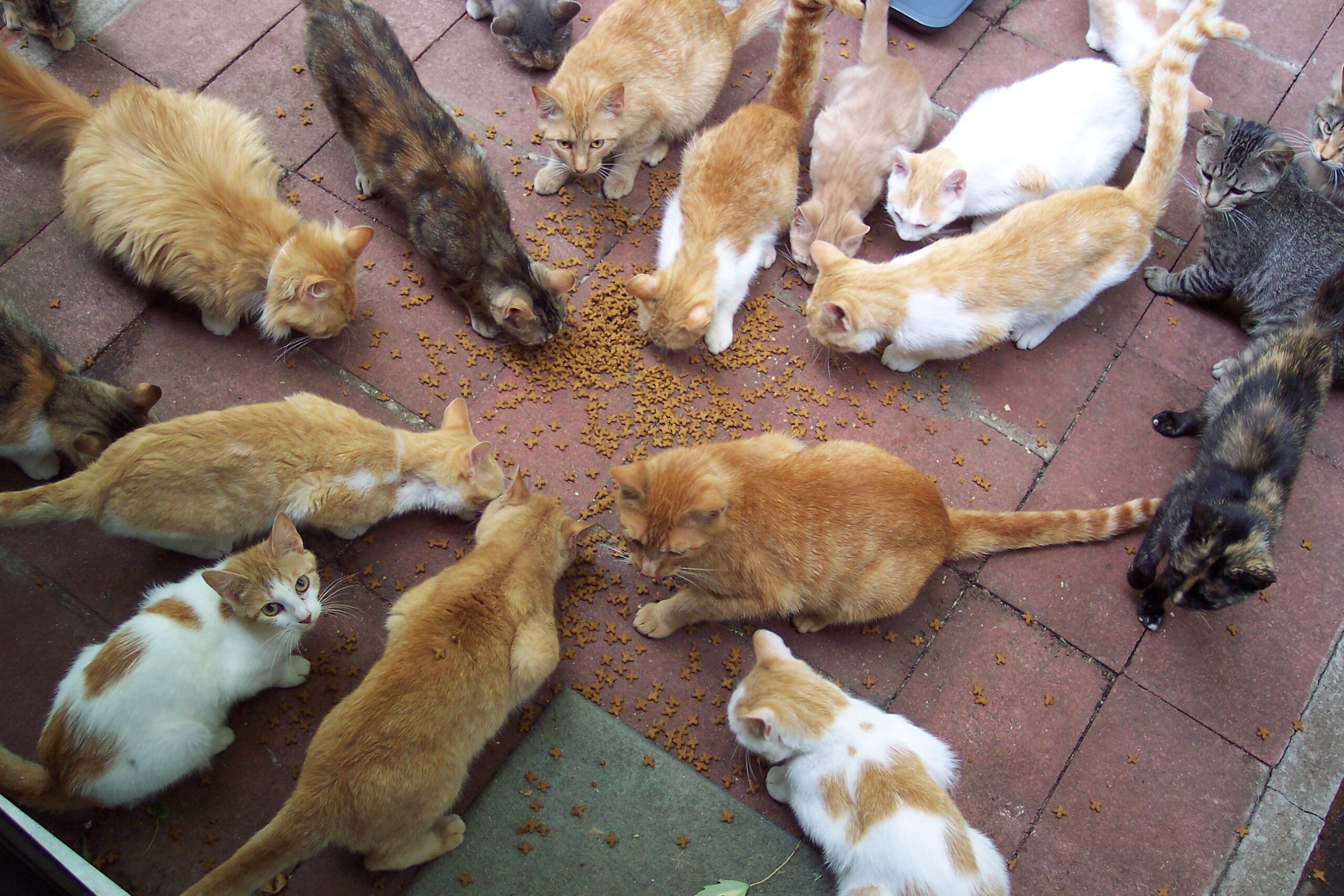
Feline herpesvirus type 1 (FHV-1) is an enveloped, double-stranded DNA alphaherpesvirus and one of the major drivers of feline upper respiratory disease complex. Transmission occurs via direct contact with ocular, nasal, and oral secretions and via short-range aerosols and contaminated fomites. FHV-1 is ubiquitous – most cats are exposed during their lifetime, commonly as kittens. Following primary infection, the virus establishes lifelong latency in the trigeminal ganglia, from which it can reactivate and be re-shed intermittently, particularly under physiological or environmental stress.
Species-Specific Manifestations
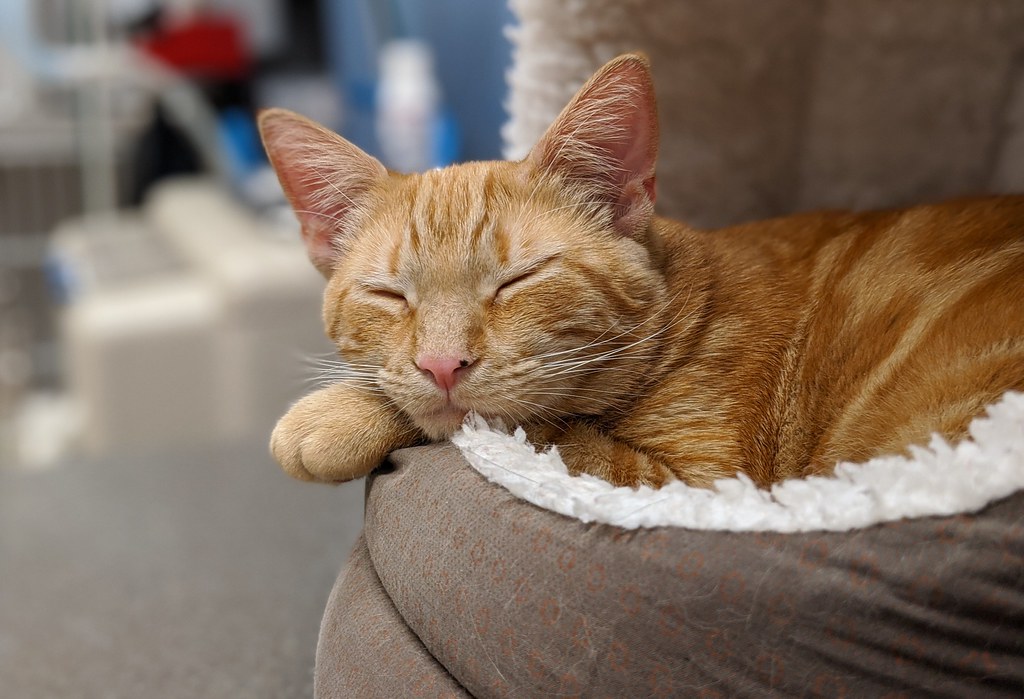
Primary infection typically produces sneezing, oculonasal discharge, and conjunctivitis, with keratitis – including the characteristic dendritic corneal ulcer – a hallmark that distinguishes FHV-1 from other agents in the upper respiratory tract disease (URTD) complex. In neonatal and very young kittens, infection can be severe and occasionally fatal. Recrudescent disease in adults is usually milder but chronic, and repeated corneal involvement can lead to sequelae such as corneal sequestrum, symblepharon or eosinophilic keratitis, most often in hospitalised, boarded, or recently rehomed cats.
The Diagnostic Value Proposition
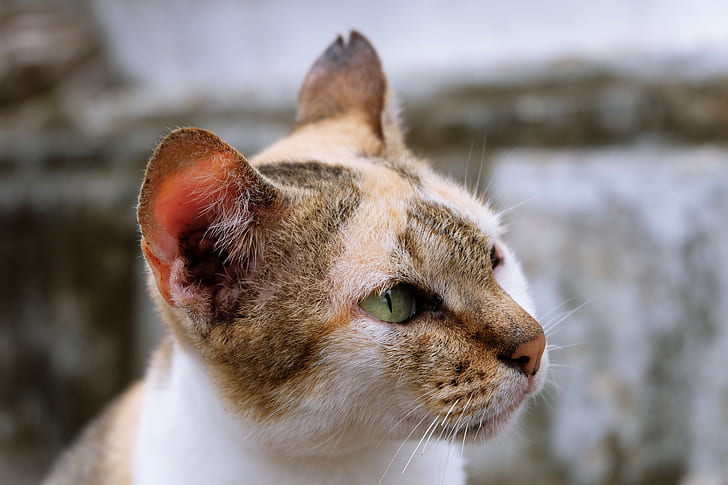
Latently infected cats shed FHV-1 intermittently and often at low copy number, requiring a highly sensitive nucleic acid method to catch low-level reactivation. A fast result supports same-visit decisions on antiviral therapy and isolation. DNA detection also helps differentiate herpetic keratitis from other causes of feline ocular surface disease when the corneal picture is not classic.
Overall workflow
1. Prepare the sample in 5 minutes with the SampleDirect cartridge
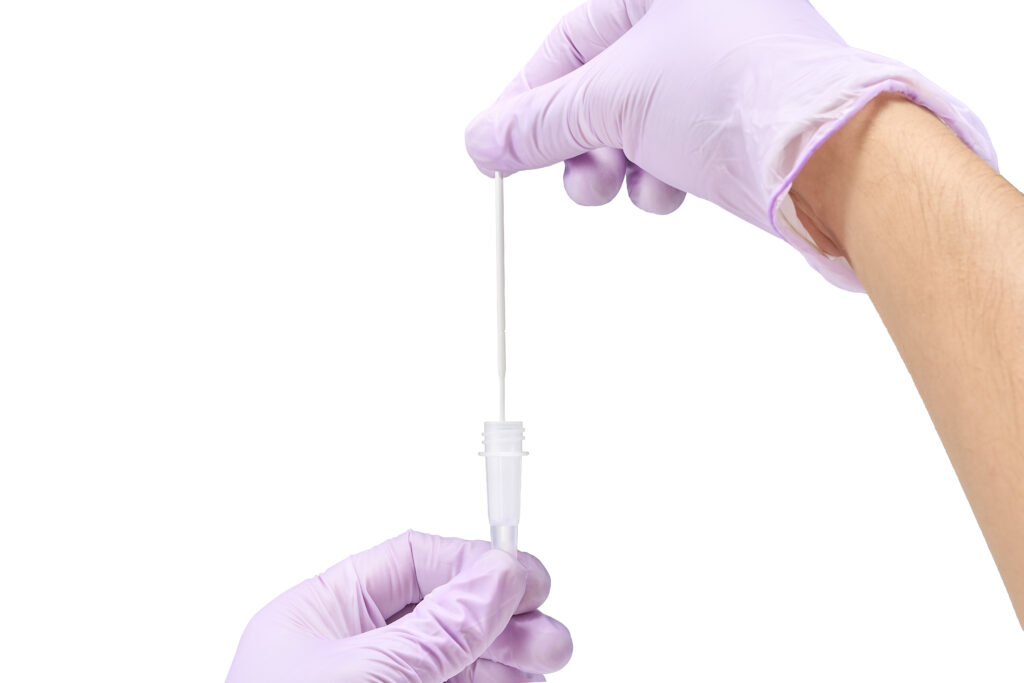
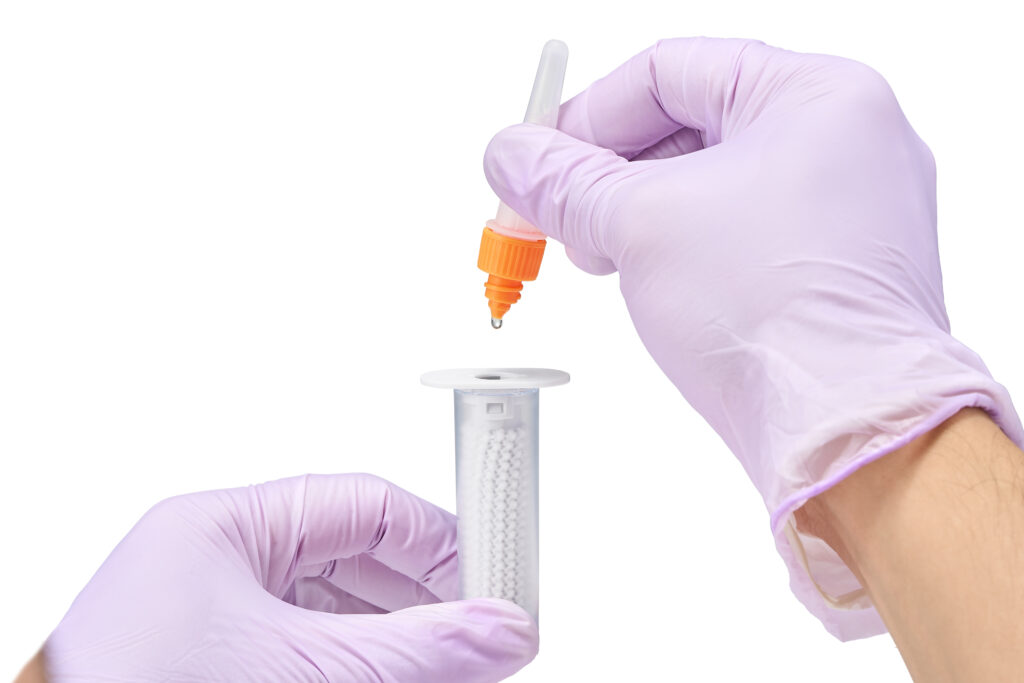
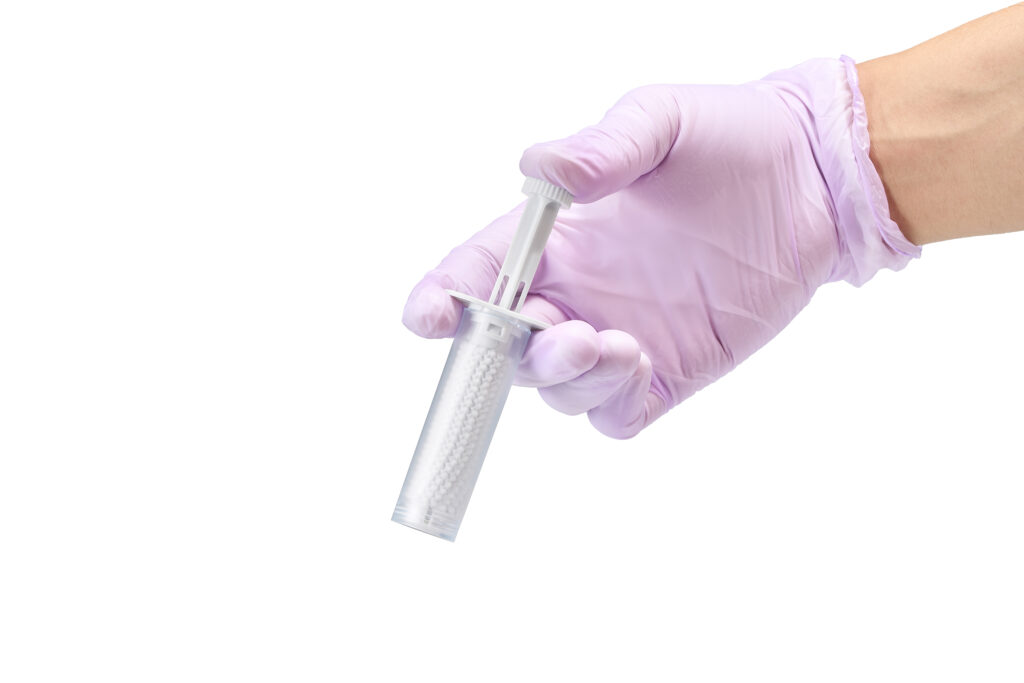
2. Transfer sample into the test cartridge and run it on the FLASH BaseTM
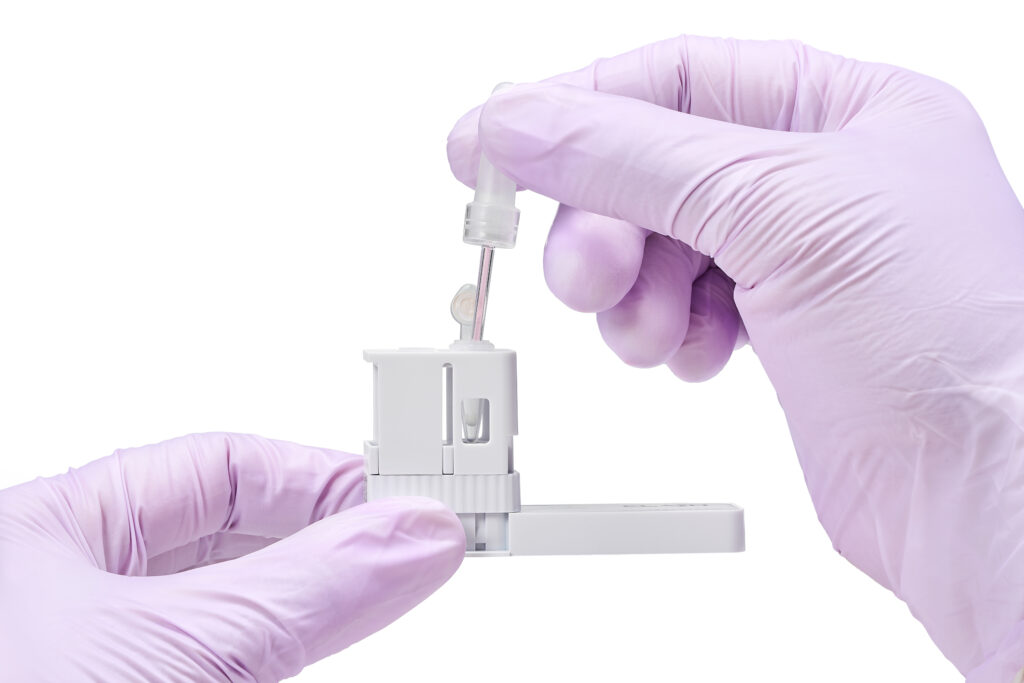
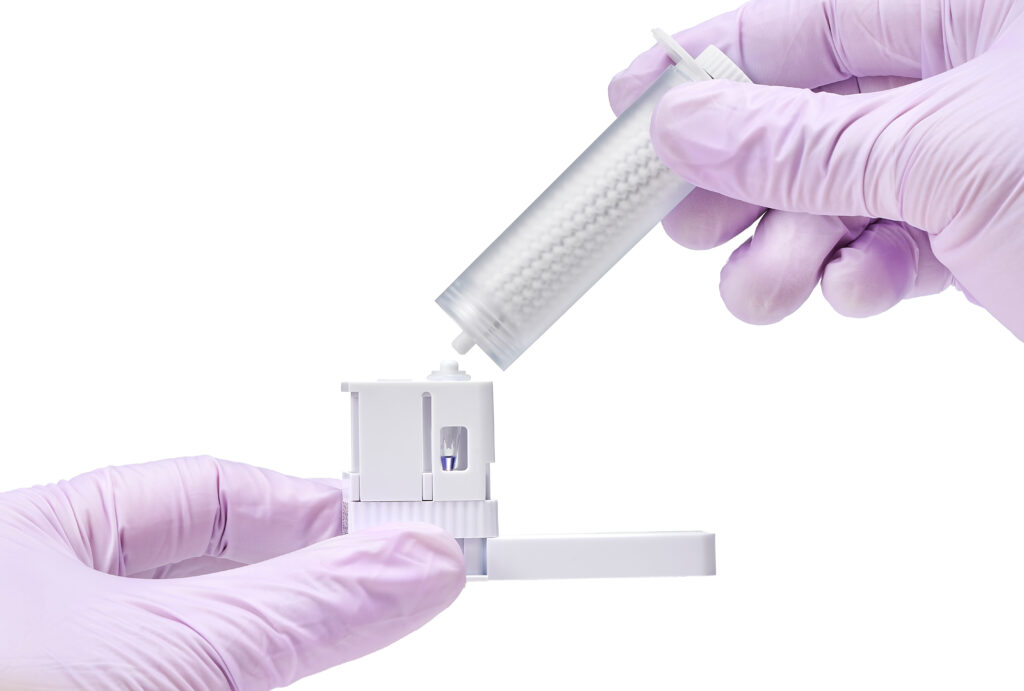
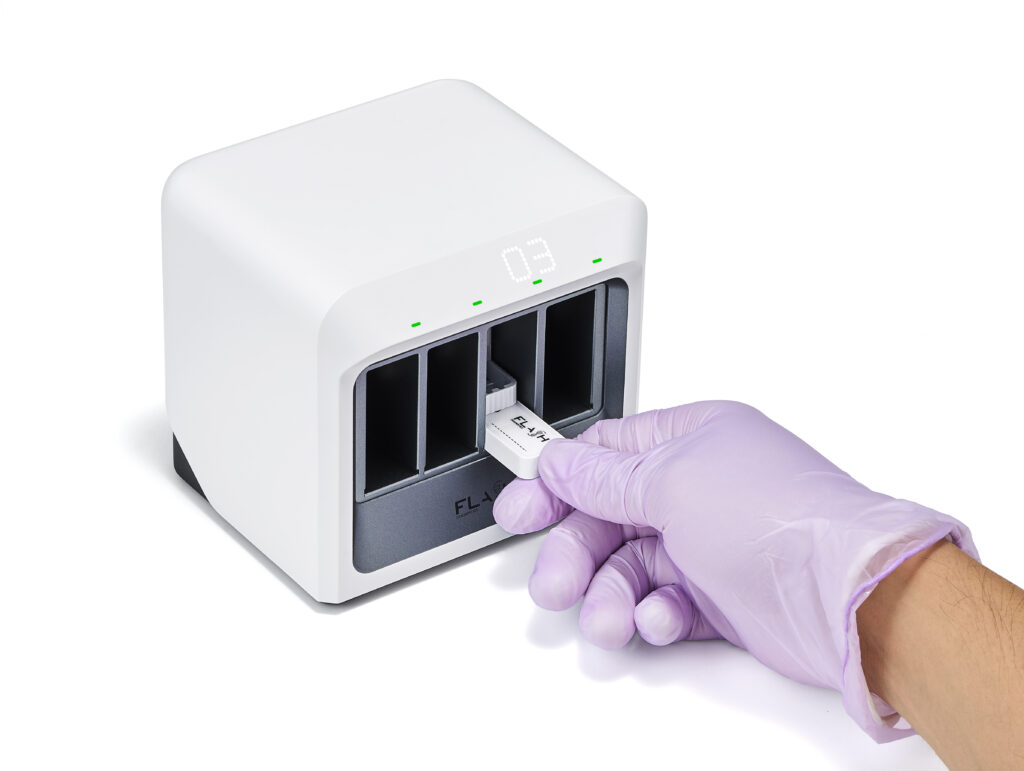
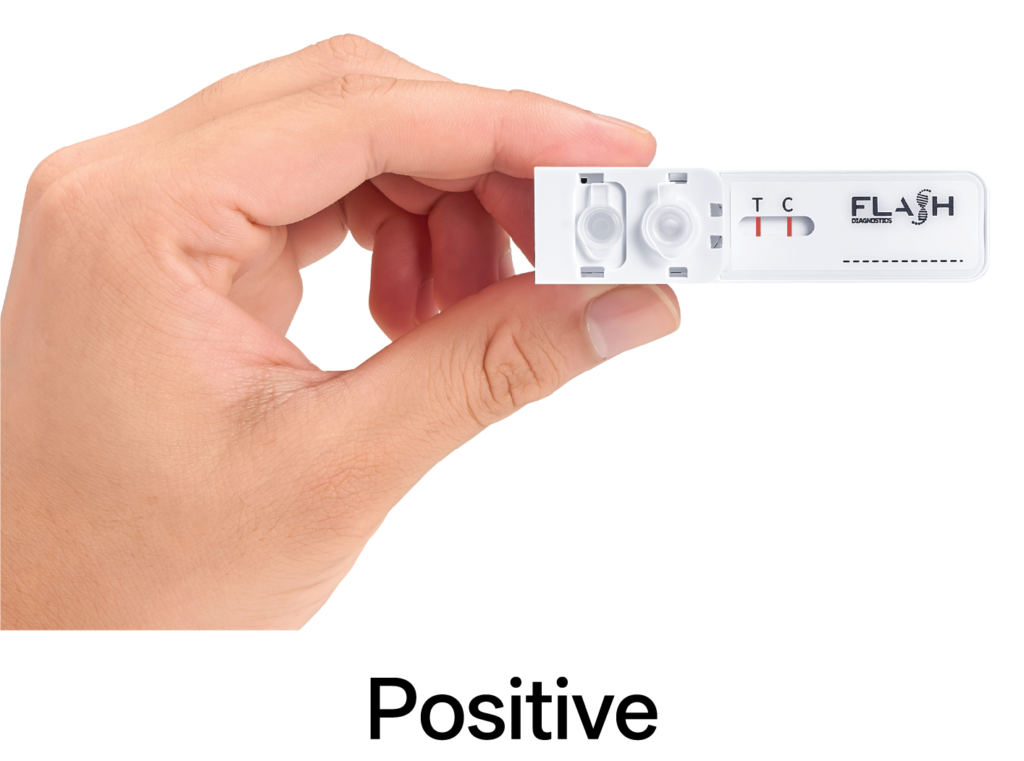
3. Activate the test cartridge and read the results
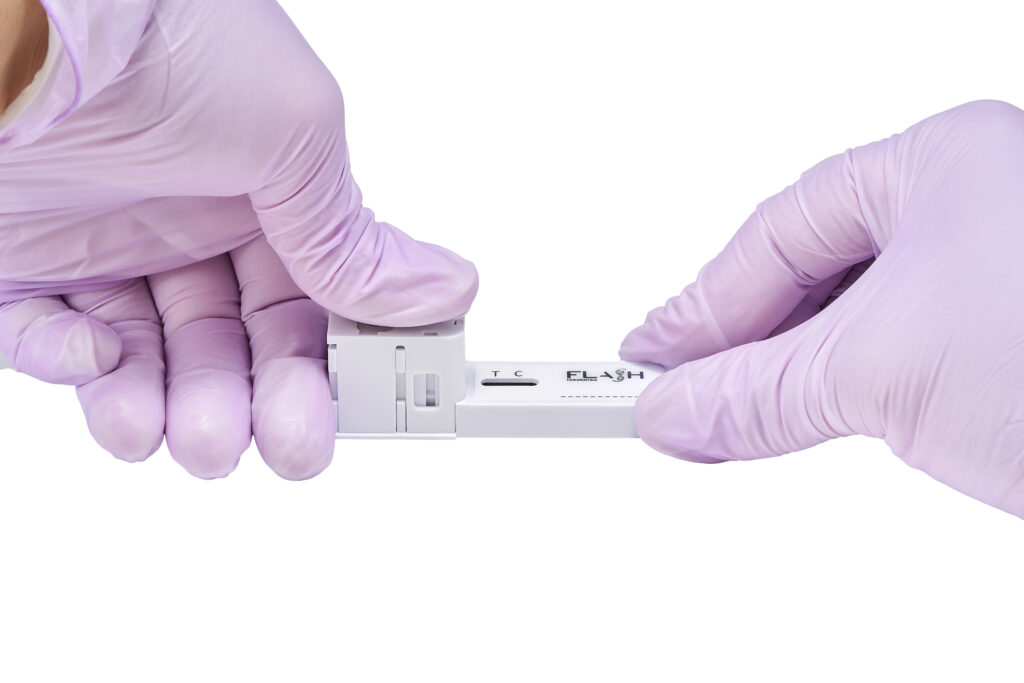
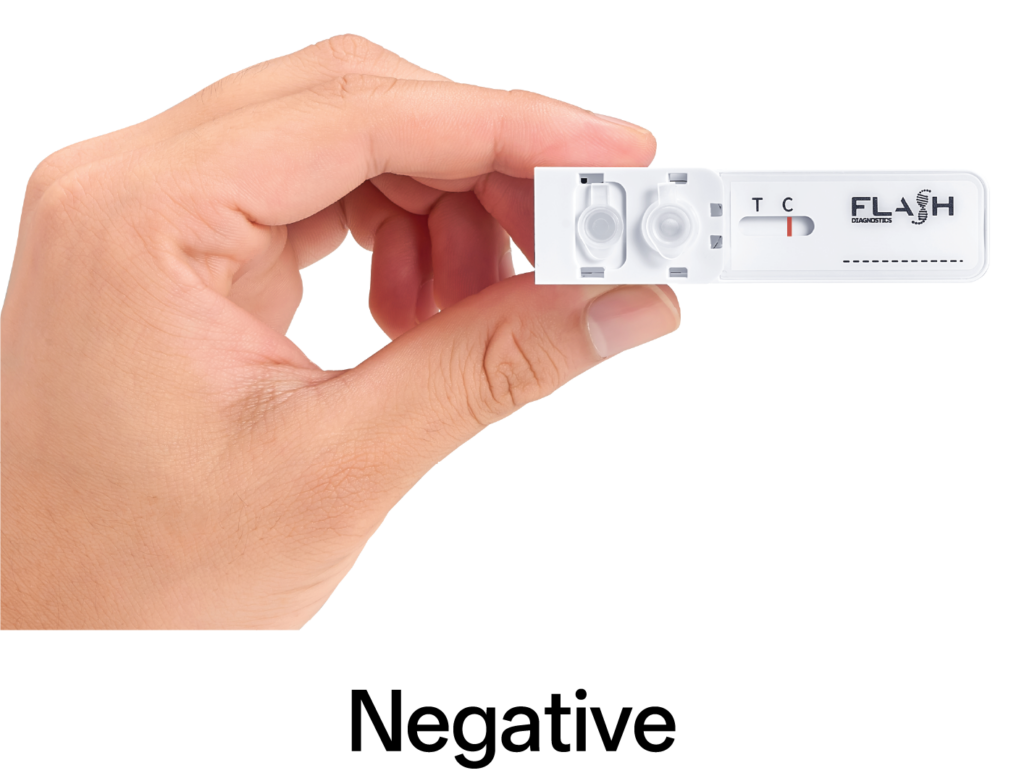
OR
General information
Target: Feline herpesvirus
Species: Feline
Sample type: Oropharyngeal, nasal, and conjunctival swab
Result interpretation: Visual – lateral flow strip
Format: Single-use disposable test kit
Reagents: Lyophilized beads for isothermal amplification reaction
Hands-on sample preparation: 5 minutes
Reaction time: 30 minutes
Analytical limit of detection: 500 copies per reaction
Shelf life and storage: 12 months at room temperature